

Sara Larraín, Chile Sustentable Program
Chile is a mountainous country where 70% of the population relies on water from the mountain ranges, which are primarily fed by snow and glaciers that ensure a supply of drinking water for the population, the preservation of ecosystems, and the continuity of economic activities, particularly agriculture.
Glaciers around the world are currently retreating due to global warming. Additionally, in Chile, glaciers are being directly impacted by mining (Berland 2016) through the construction of roads across them—which generates dust that settles on the glaciers and accelerates their melting— drilling, and the massive removal of ice with heavy machinery during mining operations, burying the glaciers under waste rock dumps (Contreras and Illanes, Brenning 2008; Chile Sustentable, 2011; Bodin, 2018). The situation is particularly critical in the northern and central regions of the country.

In recent decades, mining has encroached on glaciers between the Atacama and Metropolitan Regions, causing the loss of enormous freshwater reserves and contaminating water sources, which has affected human consumption, agriculture, and ecosystems. This destruction has exacerbated desertification, making cities, agriculture, and ecosystems more vulnerable in a context of increasing water scarcity due to climate change.
The best-known case of glacier destruction is that of Pascua Lama, a gold mining project by Barrick Gold, which, during its exploration activities between 1981 and 2000, irreversibly destroyed 62% of the Toro 1 Glacier, and 71% of the Toro 2 Glacier in the upper Huasco River basin (Golder Associates, 2005a). The environmental permit granted to Barrick Gold in 2005 allowed the company to mine gold via underground operations beneath the glacier area and also to deposit waste material on the largest rock glacier at the headwaters of the El Estrecho River, in the Huasco basin (Golder Associates 2005b). Following repeated penalties, the mining company’s operations were shut down in 2013. Subsequently, in 2017, the Superintendency of the Environment revoked its Environmental Qualification Resolution.
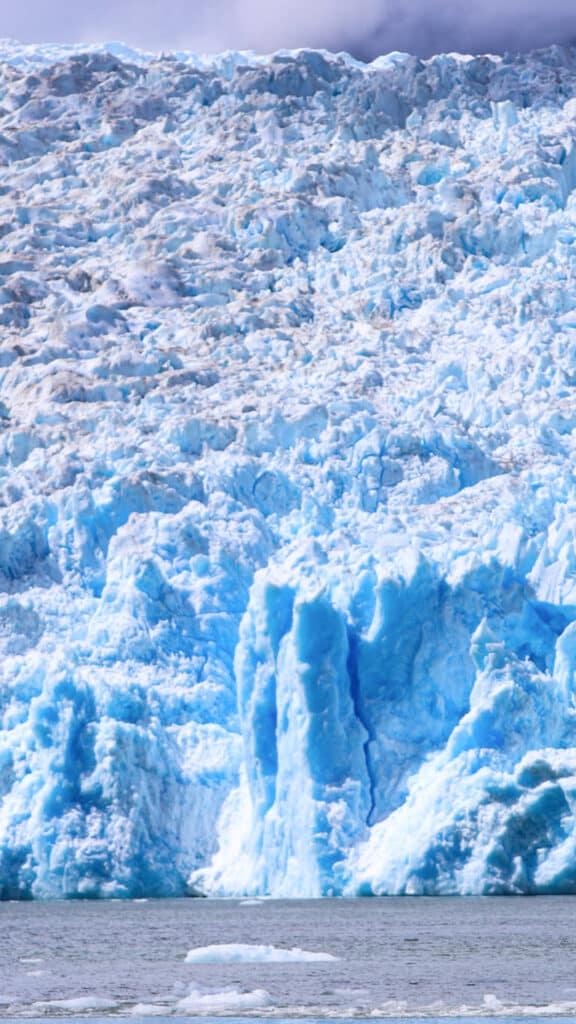
In the Coquimbo region, Minera Los Pelambres, a subsidiary of Antofagasta Minerals, has been conducting mining operations in the upper Choapa River basin since 2005, causing serious impacts on rock glaciers and water resources. In this basin, scientists identified 15 rock glaciers at elevations between 3,500 and 3,900 m. snm (mostly active rock glaciers), of which four have almost completely disappeared due to the deposition of ballast on them, and two others were affected by road construction (Brenning and Azócar, 2010). These activities involving the removal and deposition of materials were not included in the environmental studies submitted to the authorities, even though the existence of these glaciers had been known since 1998 (Geoestudios, 1998). The Pelambres project’s activities between 2000 and 2006 affected permanent reservoirs of fossilized water equivalent to 2.84 million cubic meters of freshwater—a loss not anticipated in the environmental assessment process for the mining project (Azócar and Brenning 2008).
In the Valparaíso region, Codelco Andina has been impacting rock glaciers since 1980 in the upper Aconcagua River basin, causing two rock glaciers (identified by Lliboutry in 1961) to disappear almost completely, with a total area of 1.32 km². Codelco has also altered 0.78 km² of rock glaciers with tailings deposits and mining infrastructure (Brenning, 2008). The most affected glaciers are the Rinconada and the Río Blanco, whose tongues are located within the mine pit. Studies of the area show that between 1991 and 2000, Codelco removed between 1 and 8 million metric tons of ice per year (Morales, 2001) and estimate that the company will continue to destroy glaciers at similar rates in the future, in addition to depositing millions of metric tons of tailings on the glaciers in the Sur-Sur Mine’s operating area. It is estimated that between 1990 and 2008, Codelco destroyed 2.1 km² of glaciers in the upper Aconcagua River basin, which is equivalent to the loss of between 15 and 25 million m³ of freshwater reserves in that basin (Brenning, 2008), reducing glacial recharge and water security in the Aconcagua and Valparaíso regions.
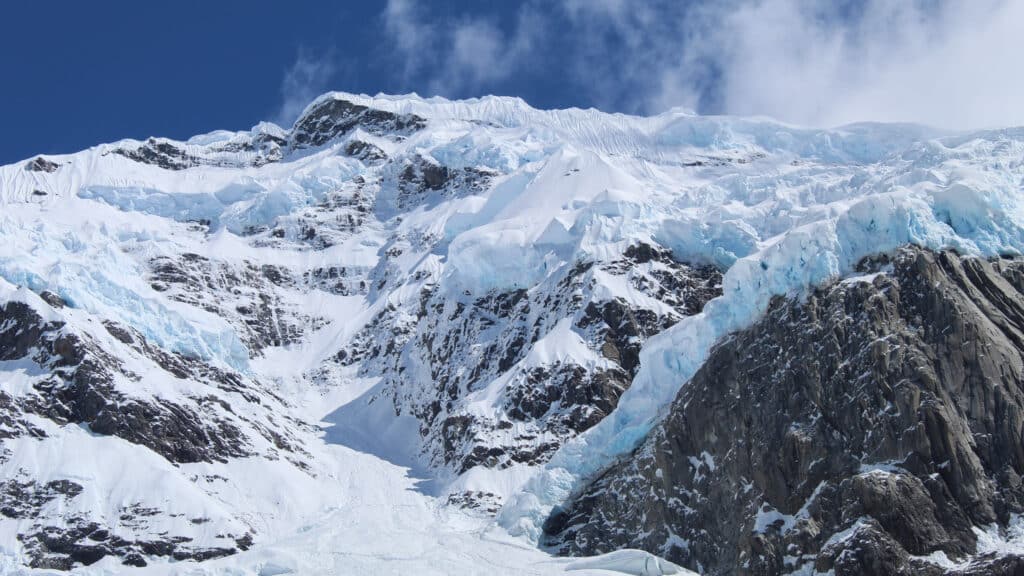
In 2010, Codelco submitted the “Andina 244 Expansion Project” to the SEIA, reporting that 100 hectares of glaciers would be affected (Official Letter No. 111747 – 2010 MMA), which was unacceptable, as it would have reduced significant water reserves in the Aconcagua River basin, exacerbated conflicts with irrigators, and increased the Valparaíso region’s water vulnerability to droughts and climate change. For this reason, the project was withdrawn from the SEIA, resubmitted in 2013, and withdrawn again due to public opposition, as the authority noted that the expansion would impact 20 glaciers, affecting 560,900 m² through excavation and 1,015.400 m² through burial under waste rock, projecting an ice loss equivalent to a reserve of 12,599,000 m³ of freshwater (SEA, 2015). Despite resubmitting the proposal for evaluation in 2017, the company has not yet obtained the environmental permit, although local stakeholders claim that the expansion has already begun.
In the Metropolitan Region, Anglo American operates the Los Bronces Mine in the upper basin of the Mapocho and Olivares rivers, the latter being a tributary of the Maipo River, which supplies Santiago’s drinking water and irrigates 120,000 hectares in the Maipo Valley (Chile Sustentable, 2010). Between 1988 and 2005, Anglo American destroyed nearly 1 square kilometer of glaciers in the upper San Francisco River basin, which feeds the Mapocho, resulting in the loss of 9 million cubic meters of freshwater reserves (Azocar and Brenning, 2008). Anglo’s impact on rock glaciers is well documented, particularly on the Infernillo Glacier (Contreras and Illanes, 1992; Valenzuela, 2004; Brenning, 2008), which has accelerated the glacier’s natural advance due to the 14 million metric tons of debris deposited by the mining company on its surface (Brenning, 2010). In the San Francisco, Dolores, and El Plomo river basins, there are 37 rock glaciers (Geoestudios, 2006), which cover an area of 5 km² across the three basins. However, the expansion of the mine pit has occupied 0.2 km², and, together with the excavation of the rock glacier for the pit, has reduced the amount of water that the San Francisco River basin contributes to the Mapocho River. In 2011, Anglo American continued the expansion of Los Bronces by constructing (without an Environmental Impact Assessment), a 9-kilometer-long, 4.5-meter-diameter mega-tunnel under the La Paloma glacier, in the municipality of Barnechea, extending to the Olivares glacier in San José de Maipo. The project, which was denounced by civic organizations, the Municipality of Barnechea, and members of Congress (La Segunda, Dec. 2011), was never subject to an environmental assessment. In August 2019, Anglo American submitted a proposal to the SEIA for a new expansion of Los Bronces, this time involving underground mining; In response, and in the absence of a law to protect glaciers, citizens once again began working to prevent the destruction of glaciers through the only—and limited—avenue available to them: submitting comments on the environmental impact study.
(from *State of the Environment in Chile 2019*, University of Chile)